
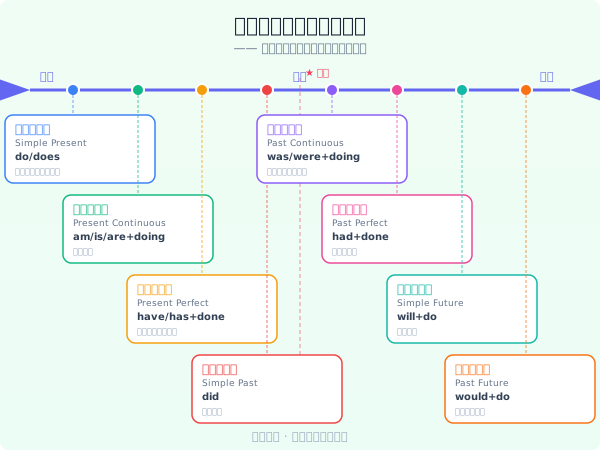
一、八大时态逐一精讲
1. 一般现在时(Simple Present)
结构公式
肯定句:主语 + 动词原形 / 动词三单
否定句:主语 + don't/doesn't + 动词原形
一般疑问句:Do/Does + 主语 + 动词原形?
时间状语与标志词
- always / usually / often / sometimes / seldom / never
- every day / every week / every month
- once a week / twice a month
- on Mondays / in the morning
用法说明
一般现在时主要用于描述经常发生的动作、客观事实、普遍真理以及目前的状态。当主语是第三人称单数(he/she/it)时,谓语动词需加-s或-es。
- The earth moves around the sun.(客观真理)
- She goes to school by bus every day.(经常性动作)
- I like playing basketball.(目前状态)
中考真题
(2023·北京)My mother ______ (cook) dinner every evening.
解析:句末有every evening表示经常性动作,主语My mother是第三人称单数,故填cooks。
2. 现在进行时(Present Continuous)
结构公式
肯定句:主语 + am/is/are + doing
否定句:主语 + am/is/are + not + doing
一般疑问句:Am/Is/Are + 主语 + doing?
时间状语与标志词
- now / right now / at the moment
- Listen! / Look! / Be quiet!
- these days / this week
用法说明
现在进行时表示说话当下正在进行的动作,或现阶段正在持续但此刻不一定在进行的动作。注意:表示状态、感觉、拥有等含义的动词(如know、like、belong)一般不用进行时。
- Listen! Someone is singing in the next room.(此刻正在发生)
- We are preparing for the exam these days.(现阶段持续)
- She is getting taller and taller.(渐进变化)
中考真题
(2023·上海)— Where is Tom? — He ______ (play) football on the playground.
解析:问句询问Tom此刻的位置,暗示答语描述正在进行的动作,故填is playing。
3. 一般过去时(Simple Past)
结构公式
肯定句:主语 + 动词过去式
否定句:主语 + didn't + 动词原形
一般疑问句:Did + 主语 + 动词原形?
时间状语与标志词
- yesterday / the day before yesterday
- last night / last week / last month / last year
- ...ago(two days ago / three years ago)
- in 2020 / in the past / just now
用法说明
一般过去时用于表示过去某个时间发生的动作或存在的状态,常与明确的过去时间状语连用。动词过去式的变化分为规则变化(加-ed)和不规则变化(需单独记忆)。
- I visited the Great Wall last summer.(过去具体时间)
- She was very happy when she heard the news.(过去状态)
- They played basketball yesterday afternoon.(过去动作)
中考真题
(2023·广州)We ______ (have) a class meeting last Friday.
解析:last Friday是明确的过去时间,谓语动词用过去式,故填had。
4. 过去进行时(Past Continuous)
结构公式
肯定句:主语 + was/were + doing
否定句:主语 + was/were + not + doing
一般疑问句:Was/Were + 主语 + doing?
时间状语与标志词
- at this/that time yesterday
- at 8:00 last night
- when / while引导的时间状语从句
- all morning yesterday
用法说明
过去进行时表示过去某一时刻或某一段时间内正在进行的动作。常与一般过去时连用,过去进行时表示持续时间较长的背景动作,一般过去时表示短暂发生的动作。
- I was watching TV when my mother came home.(过去某一刻正在发生)
- They were playing football all afternoon yesterday.(过去某段时间持续)
- While I was reading, my sister was dancing.(两个同时进行的动作)
中考真题
(2023·深圳)When the teacher came in, the students ______ (read) books.
解析:when引导的时间状语从句用一般过去时,主句表示那一刻正在进行的动作,故填were reading。
5. 一般将来时(Simple Future)
结构公式
肯定句:主语 + will + 动词原形 / 主语 + am/is/are going to + 动词原形
否定句:主语 + will not/won't + 动词原形 / 主语 + am/is/are not going to + 动词原形
一般疑问句:Will + 主语 + 动词原形?/ Am/Is/Are + 主语 + going to + 动词原形?
时间状语与标志词
- tomorrow / the day after tomorrow
- next week / next month / next year
- in + 时间段(in two days)
- soon / in the future
用法说明
一般将来时表示将来某个时间将要发生的动作或存在的状态。will更侧重主观意愿或临时决定;be going to更侧重计划安排或有迹象表明即将发生。
- It will rain tomorrow according to the weather forecast.(推测)
- We are going to visit the museum next Sunday.(计划)
- — Someone is knocking at the door. — I will open it.(临时决定)
中考真题
(2023·杭州)There ______ (be) a sports meeting next month.
解析:next month是将来的时间,there be句型的一般将来时用There will be或There is/are going to be,故填will be。
6. 过去将来时(Past Future)
结构公式
肯定句:主语 + would + 动词原形 / 主语 + was/were going to + 动词原形
否定句:主语 + would not/wouldn't + 动词原形 / 主语 + was/were not going to + 动词原形
一般疑问句:Would + 主语 + 动词原形?/ Was/Were + 主语 + going to + 动词原形?
时间状语与标志词
- 常出现在宾语从句或间接引语中
- the next day / the following week
- the next morning / the following year
用法说明
过去将来时表示从过去某个时间点看将来要发生的动作。主要出现在主句为一般过去时的宾语从句中。would do表示「过去某时之后将发生」;was/were going to do表示「过去计划要做某事」。
- He said he would come to the party.(从过去看将来)
- She told me she was going to buy a new car.(过去的计划)
- I knew you would succeed one day.(过去的看法)
中考真题
(2022·南京)She said she ______ (return) the book to the library the next day.
解析:主句said为一般过去时,从句表示从过去将来看将来,the next day提示将来,故填would return。
7. 现在完成时(Present Perfect)
结构公式
肯定句:主语 + have/has + 动词过去分词
否定句:主语 + haven't/hasn't + 动词过去分词
一般疑问句:Have/Has + 主语 + 动词过去分词?
时间状语与标志词
- already / yet / just / ever / never
- recently / lately / so far / up to now
- since + 时间点 / for + 时间段
- in the past/last + 时间段
用法说明
现在完成时强调过去发生的动作对现在造成的影响或结果,或者表示从过去持续到现在的动作或状态。它与一般过去时的核心区别在于:现在完成时强调「与现在的联系」,而一般过去时只陈述过去的事实。
- I have finished my homework. I can go out now.(对现在有影响)
- She has lived in Beijing since 2018.(从过去持续到现在)
- He has never been to the Great Wall.(迄今为止的经历)
中考真题
(2023·武汉)— ______ you ever ______ (be) to Shanghai? — Yes, twice.
解析:ever提示询问「迄今为止」的经历,用现在完成时,故填Have; been。
8. 过去完成时(Past Perfect)
结构公式
肯定句:主语 + had + 动词过去分词
否定句:主语 + had not/hadn't + 动词过去分词
一般疑问句:Had + 主语 + 动词过去分词?
时间状语与标志词
- by + 过去时间点(by last night / by 2020)
- before + 过去时间点
- when / after / until引导的从句(先后关系)
- already / just / ever / never(在过去的过去语境中)
用法说明
过去完成时表示「过去的过去」,即在过去某个时间点之前已经完成的动作。它不能单独使用,必须依托于一个过去的时间参照点。常用于包含before、after、when等连词的复合句中表明动作的先后顺序。
- By the time I arrived, the bus had already left.(过去的过去)
- She had studied English for three years before she moved to the UK.(过去的过去持续)
- After I had finished my homework, I watched TV.(先后顺序)
中考真题
(2023·成都)He said he ______ (see) the film before.
解析:主句said是过去时,「看电影」发生在said之前(过去的过去),且before提示完成,故填had seen。
二、八大时态对比总结表
| 时态名称 | 结构公式 | 标志词 | 例句 |
|---|---|---|---|
| 一般现在时 | do/does | always, usually, every day | I get up at six every morning. |
| 现在进行时 | am/is/are + doing | now, Listen!, Look! | She is reading a book now. |
| 一般过去时 | did(过去式) | yesterday, last night, ...ago | He went to Beijing last week. |
| 过去进行时 | was/were + doing | at that time, when/while | I was sleeping when he called. |
| 一般将来时 | will + do / be going to + do | tomorrow, next week, soon | They will arrive tomorrow. |
| 过去将来时 | would + do / was/were going to + do | the next day, said that... | She said she would help me. |
| 现在完成时 | have/has + done | already, yet, since, for | I have finished my homework. |
| 过去完成时 | had + done | by the time, before, already | The train had left when I arrived. |
三、易混淆时态辨析
3.1 现在完成时 vs 一般过去时
- 一般过去时:强调动作发生在过去,与现在无关。常与yesterday、last year、...ago等表示过去的时间状语连用。
例:I lost my key yesterday.(昨天丢了,可能已找到也可能没找到,仅陈述过去事实) - 现在完成时:强调过去的动作对现在有影响或结果,不能与明确的过去时间状语连用。
例:I have lost my key.(现在还没找到,进不了门——强调对现在的影响)
3.2 现在进行时 vs 一般现在时
- 一般现在时:表示经常性动作或客观事实。
例:He teaches English at a high school.(职业/经常性) - 现在进行时:表示此刻正在做的动作。
例:He is teaching English now.(此刻正在上课)
3.3 一般过去时 vs 过去完成时
- 一般过去时:表示过去某个时间发生的动作。
- 过去完成时:表示在过去的某个时间点「之前」完成的动作,即「过去的过去」。
- 对比:When I arrived(一般过去时), the train had left(过去完成时).
四、中考时态填空专项练习(10题)
请用所给动词的适当时态填空:
- She often ______ (read) books in the library after school.
- Listen! The birds ______ (sing) in the tree.
- They ______ (visit) the science museum yesterday.
- I ______ (not finish) my homework yet. Please wait a moment.
- While my mother ______ (cook), I was doing my homework.
- By the end of last term, we ______ (learn) over 2000 words.
- He ______ (go) to Beijing next week for a meeting.
- She said she ______ (call) me as soon as she arrived.
- ______ you ever ______ (eat) Peking duck?
- We ______ (have) a picnic if it doesn't rain tomorrow.
参考答案与解析:
- reads — often提示经常性动作,主语She是第三人称单数。
- are singing — Listen!提示此刻正在发生。
- visited — yesterday是明确的过去时间状语。
- haven't finished — yet提示现在完成时,且对现在有影响。
- was cooking — while引导从句与主句同时进行,都用过去进行时。
- had learned — by the end of last term是「过去的过去」时间点。
- will go / is going — next week是将来的时间。
- would call — 主句said为过去时,从句用过去将来时。
- Have; eaten — ever提示询问「迄今为止」的经历。
- will have — if条件状语从句用一般现在时表将来,主句用一般将来时。
五、中考时态识别三步法
面对中考时态题,按照以下三步快速锁定正确答案:
第一步:找标志词
先扫描题干中的时间标志词。看到yesterday、last night、...ago→立刻锁定一般过去时;看到now、Listen!→立刻锁定现在进行时;看到already、yet、since、for、ever→立刻锁定现在完成时;看到tomorrow、next week→立刻锁定一般将来时。
第二步:看主从句关系
如果题干是复合句,分析主句和从句的时态关系:
- 主句过去时 + 从句动作在主句之前→过去完成时
- 主句过去时 + 从句动作在主句之后→过去将来时
- when + 一般过去时(短暂动作),主句用过去进行时(持续背景)
- while + 进行时,主句从句通常都用进行时
- if条件状语从句:主将从现(主句将来时,从句一般现在时)
第三步:排除干扰项
注意动词的类别——状态性动词(know、like、belong、have等)一般不用进行时态;注意名词单复数对主谓一致的影响;注意不规则动词的过去式和过去分词形式。最后通读全句,检查逻辑是否通顺。
六、常见中考陷阱提醒
陷阱一:看到since或for就用现在完成时——不一定!如果句子描述的是过去的事实(明确说「过去某个时间做的」),即使有for/since也要用一般过去时。
正确:I have lived here for ten years.(我住在这里十年了,现在还住。)
(对比)I lived there for ten years.(我在那里住了十年,现在不住了。)
陷阱二:already只能用于现在完成时——错!already也可以用于一般过去时,如「I already told you.」(口语中非常常见。)
陷阱三:yesterday、last night等词后面一定用过去时——不一定!如果是在报道未来计划(如「I learned yesterday that we will have a test next week」),主句用过去时,但从句仍用将来时表达从现在的角度看将来。
陷阱四:used to do 和 be used to doing 混淆——used to do表示「过去常常做」(现在不做了),用一般过去时范畴;be used to doing表示「习惯做某事」,可用任何时态。
评论 (0)
登录 后即可发表评论